 SEA Featured Scholar, July 2026: Abram Van Engen
How did you become interested in studying early American literature/culture?
When I began graduate school, I wanted to study twentieth-century poetry and literary theory. But I kept moving back, earlier and earlier, wanting to know sources, influences, the long shape of literature over time. My comps exam did not separate “American literature” into periods; instead, it started with the colonial era and ended with Toni Morrison. I loved that. When I reached the puritans (who were not first), I found myself recognizing moves, tensions, and paradoxes I had experienced as a Dutch Reformed kid. That hooked me. I wanted to know how they dealt with those paradoxes in a very different time, place, and set of circumstances – while also, hopefully, keeping in view that longer arc of American literature.
Who is your favorite early American writer, or what is your favorite early American text, and why?
My favorites turn me back to poetry. I will never tire of teaching Anne Bradstreet, Edward Taylor, and Phillis Wheatley Peters. Each of them, in radically different ways, had to figure out how to find a voice, how to use that voice, and—most importantly—who should hear that voice. I think, in many ways, Wheatley wrote for an audience she did not have, in hope and expectation that the right readers would come. Taylor wrote in private, for him and his God, but in ways that shaped all else he did and said. And Anne Bradstreet struggled to accept that she ought to write for God when, I think, she often wanted to write for fame.
What are you currently working on?
My projects take me a few different directions. Mostly, these days, it’s all about Anne Bradstreet. Mary Eyring and I have just published Anne Bradstreet Now: Modern Poets Respond, in which over twenty amazing poets respond in their own poetry and prose to the life and work of Bradstreet. We are also editing an Oxford Handbook of Anne Bradstreet. And alongside these books, I am trying to write a new literary biography of Anne Bradstreet, focused on her devotions, tensions, and motivations.
What are you reading right now that inspires you?
I just finished Talking Classics by Mary Beard, which I loved. It offers a non-defensive defense of the humanities. I’m always listening to novels, and I just finished Good Lord Bird, which is one of the best books I’ve read in a long while. Poetry has taken me to A.E. Stallings, a new favorite. And, more personally, in the devotional time I try to do each day, I just read Eugene Peterson’s Answering God:The Psalms as Tools for Prayer, which I found wonderfully inspiring in a different sort of way.
Is there a scholar in the field who inspires you?
These days I am deeply concerned about institutions, which make so much of what we do possible. And for that reason, I am inspired most by those who run our institutions well: Katy Chiles and Cassie Smith at Early American Literature, who give us a flagship journal; and Kelly Wisecup, Kirsten Silva Gruesz, and Caroline Wigginton, who do the hard work of organizing us, bringing us together, and pushing us forward. These scholars not only contribute their own excellent scholarship and teaching; they make possible the excellent scholarship and teaching of others. That’s inspiring.
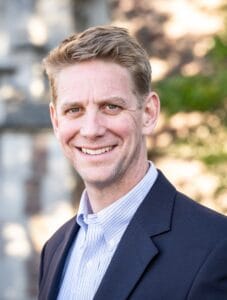
Abram Van Engen is the Stanley Elkin Professor in the Humanities and Director of the John C. Danforth Center on Religion and Politics at Washington University in St. Louis.